
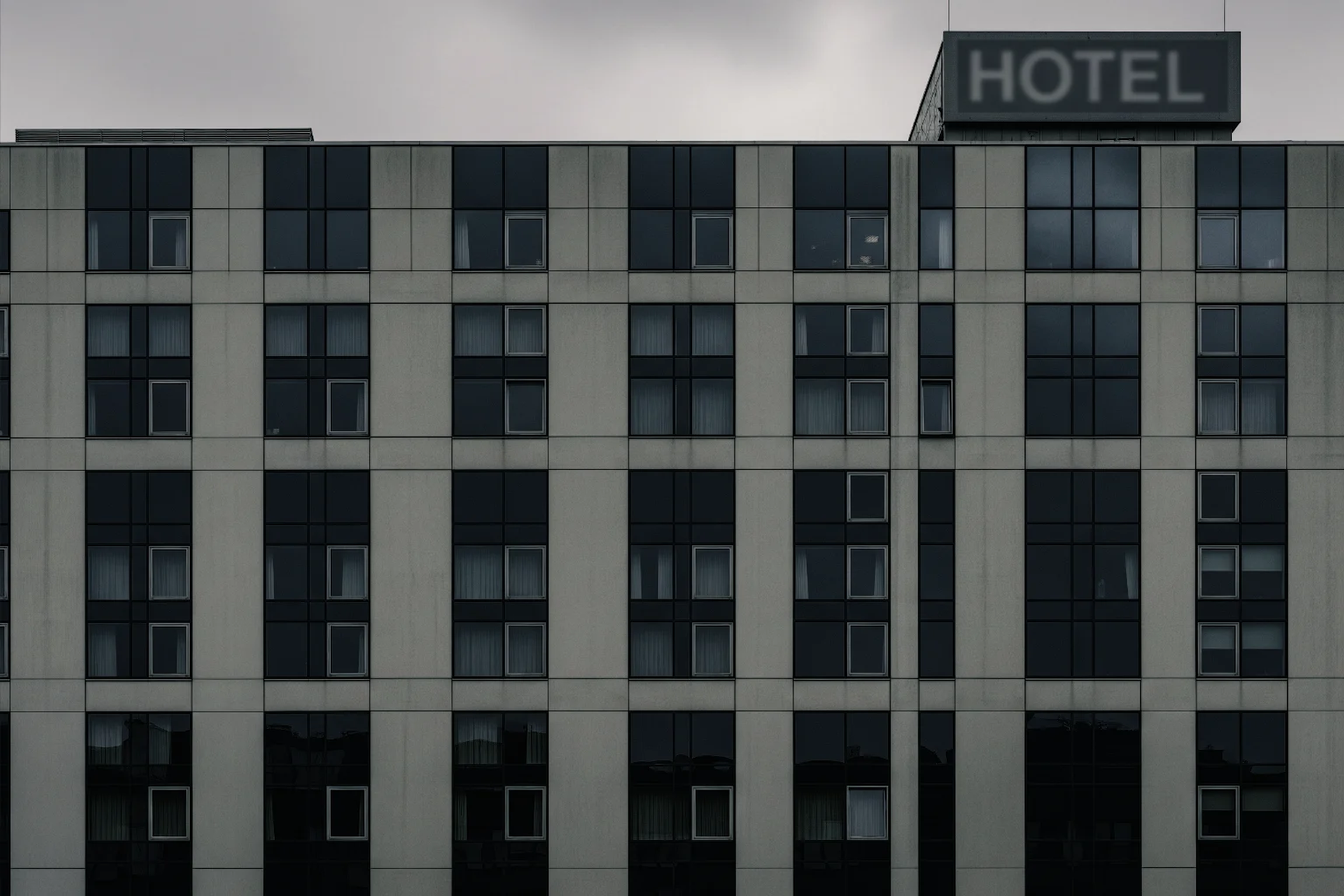
In the first seven months of the 2024–25 financial year, the Home Office spent about £1.3 billion on asylum hotels. Hotels absorbed roughly three-quarters of accommodation contract costs while housing about a third of people on support. In the same audit window, government accountants questioned around £58 million of charges billed above agreed rates.
Ministers spent the first half of 2025 claiming thousands of asylum seekers were being ‘moved out’ of hotels. The bills barely moved. The hotel population stayed almost flat.
This investigation examines why ministerial claims of rapid progress do not match the government’s own statistics or audit records.
The answer appears to lie in how the state pays for hotels. When the department books an entire building for a fixed fee, individual ‘exits’ do not automatically produce savings. The rooms remain paid for whether occupied or not. Until the whole contract ends, taxpayers keep paying. That distinction between gross exits and net savings sits at the heart of this contradiction.
The £58 Million Question
In May 2025, the National Audit Office recorded control failures in asylum accommodation spending. Auditors said the department had not fully evidenced about £58 million in hotel charges for 2023–24, billed above original agreement rates. That sits inside reported accommodation spending of billions across the financial year, with hotels taking the largest slice.
The audit highlighted familiar failure modes in emergency procurement.
Rate cards were revised multiple times without updated schedules reaching every site manager. Local staff signed off extras that were not mirrored in head-contract paperwork. The department’s own records could not show whether surcharges related to security, transport, or meals, making it impossible to test value for money.
The context matters. Emergency expansion from 2021 onwards pushed officials into rapid contracting and repeated variations. Each change introduced scope for error and weakened the trail from claim to invoice to payment. The audit did not say the money was definitively wasted. It said the department could not show, to the required standard, that the extra charges were justified.
The department accepted the recommendations and promised to tighten controls. There is no published statement confirming recovery as of 30 June 2025.
The core point is simple. If auditors cannot reconcile invoices to agreed rates at scale, then any headline about reduced daily costs should be treated with caution. Price renegotiations can lower a published average even while the cash going out remains high, especially if the buyer is also paying for empty rooms.
Key Finding: The Cost Imbalance
- Expenditure: 76 per cent of the accommodation budget was spent on hotels.
- Occupancy: This expenditure housed only 35 per cent of the supported asylum population.
- Source: National Audit Office Report, May 2025.
A Timeline of Official Claims
Public statements on hotel closures and savings began to diverge from data in early 2025.
In January, ministers told the Lords that daily hotel costs had already fallen from around £8 million to £6 million and that closures were underway. They also claimed that 16,000 failed asylum seekers had been removed from hotels since July 2024.
By March, the line to MPs was that hotels would be closed ‘as quickly as practicable’. Opposition figures replied that numbers in hotels had risen by about 8,000 since the general election. By June, ministers were promising a ‘big surge’ of closures in the coming year.
The recorded figures tell a flatter story.
At the end of March 2025, 32,345 people were in hotels. By 30 June, the figure was 32,059 (Home Office, ‘Immigration system statistics’). That is a net reduction of 286. Over the same quarter, the average daily cost remained in the region of £5.5 to £6 million. On a year-on-year basis, June 2025 was about 8 per cent higher than June 2024. Hotels remained more heavily used than the year before despite the ministerial language of exits and savings.
Looking at individual sites adds context. On 31 January 2025, the government lifted capacity caps at the Wethersfield base in Essex, raising regular places to 800 with 445 contingency spaces. Ministers linked this to ‘ending the use of hotels’. It helped to ease some pressure. But other large-site schemes, including plans for RAF Scampton and the use of the Bibby Stockholm barge, stalled or were abandoned. That left hotels carrying the load.
A quick note on sources. Parliamentary answers and debates often cite management information drawn from live contractor returns. Those figures can be accurate to the day but are also volatile and provisional. Official statistics are slower but are quality-assured and comparable quarter to quarter. When those two streams diverge, it pays to mark the dates and read the fine print on what is included or excluded from each series.
The timeline is clear. Statements created an impression of decline. The data showed continuity.
Timeline: Official Claims vs Reality
-
20 January 2025
Promise to Cut Costs and Close Hotels
In the House of Lords, the government states daily hotel costs have been reduced from over £8 million to £6 million. Ministers confirm 16,000 failed asylum seekers have been removed since July 2024, promising gradual hotel closures.
-
25 March 2025
Contradiction Emerges in Parliament
While the government reiterates its aim to close hotels, opposition MPs state the hotel population has actually increased by approximately 8,000 people since the July 2024 election. The narrative of progress is directly challenged.
-
07 May 2025
Auditors Reveal Financial Failures
The National Audit Office publishes its report, revealing hotels consume 76 per cent of the accommodation budget while housing only 35 per cent of people. The report flags £58 million in unsupported charges.
-
August 2025
Renewed Promises Amid Stagnation
Despite official data showing a near-static hotel population between March and June, the Home Office briefs the press about a forthcoming 'big surge in closures' in 2026, continuing the optimistic public messaging.
The Occupancy Paradox: ‘Exits’ vs Reality
The headline claim for the first half of 2025 was a significant reduction in the hotel population. Strip away the framing, and the numbers are almost flat across Q2. Why.
Partly because gross exits do not account for arrivals. If ten people leave a hotel cohort in a week but nine arrive, the gross exits are ten. The net change is one. When small-boat crossings rose in early 2025, demand flowed back into the same capacity the department had already paid to keep on standby. Partly because the payment model blunted any incentive to release capacity quickly. If a hotel was block-booked, the easiest course was to fill paid-for rooms first. The public narrative then became a race between exit programmes and new inflows. On paper, thousands moved. In practice, occupancy stayed close to where it started.
There is a third effect. Reporting cycles. Ministers often lean on fresh internal management information, while the public gets official statistics on a fixed schedule. That mismatch can produce confident claims one month and quiet corrections in the next set of tables.
The same logic applies to accommodation beyond hotels.
Moves into dispersal properties can be counted as exits from the hotel estate. If the dispersal unit is itself short-term or later reverts to the contractor, the headline still looks positive while underlying reliance on contingency capacity persists. Look for measures that track the share of the supported population in hotels, not only counts of people moved.
The Occupancy Paradox: Claim vs Data
| The Official Claim | The Official Data |
|---|---|
| A 6,000-person (16%) reduction in the hotel population during the first half of 2025 was briefed to the media, suggesting significant progress. | The net change between 31 March and 30 June 2025 was a reduction of only 286 people. The progress claimed was not reflected in the quarterly data. |
| The consistent narrative was of an improving situation and an exit from hotels. | The hotel population in June 2025 was 8 per cent higher than in June 2024, indicating the year-on-year trend was worsening, not improving. |
Source: Home Office Immigration Statistics, Q1-Q2 2025; Official government briefings.
The Payment Mechanism – Paying for Empty Rooms
A simple illustration helps.
Suppose a 100-room hotel is block-booked for six months at a fixed monthly fee. In week one, 90 rooms are used. In week two, 80 are used. The gross exit count is 10. The net occupancy has fallen by 10. The cash paid is unchanged until the booking is handed back or varied. Unless the department can redeploy those empty rooms without extra cost, there is no saving. The incentive then becomes to refill them quickly, which is exactly what sustained demand allows.
The audit record and contracting evidence indicate that, in several cases, the department agreed a single price for entire hotels. That is block-booking. Instead of paying a clean per-person-per-night rate, the buyer secures capacity for a period, whether or not every room is occupied.
Two consequences follow.
First, an ‘exit’ does not automatically create a saving, because the fee remains payable until the booking ends or the contract is varied. Second, the average cost per occupied night can look lower on paper after a rate renegotiation, even though the true cost, once empty rooms are counted, is higher.
Officials attempted to push up reported occupancy from around 75 per cent to 80 per cent to squeeze more value from the same bookings. Without transparent, itemised invoices and site-level occupancy logs, the public cannot tell how much empty capacity was being paid for at any given time. What is clear is that a capacity model produces a lag. Policy can declare a reduction. The accounts only improve when the block itself is handed back or repurposed.
Two quick definitions. Dispersal accommodation means ordinary housing used for asylum support, typically cheaper than hotels but slower to procure at volume. Contingency accommodation is the stop-gap, often hotels, used when dispersal units are not available. Policy said hotels were temporary. Practice was stickier.
Renegotiations did achieve headline rate reductions compared with 2023 levels. A widely quoted figure for March 2025 was around £119 per person per night, down from estimates closer to £162 at peaks in 2023. Those averages combine very different cost elements… rooms, meals, security, transport, and assume high utilisation. Where a contract bundled most of those services and fixed a block fee, the department could truthfully say the nominal nightly rate had fallen while overall spend stayed high because the booking itself remained in place.
‘The Home Office “agreed a single cost for some hotels”... This implies paying a flat rate for a whole hotel... not strictly per occupied room’.
National Audit Office Report on Asylum Accommodation Contracts, May 2025A System Under Strain
The contracting chain buckled in early 2025.
In March, the Home Office directed a prime contractor, Clearsprings, to remove a major subcontractor, Stay Belvedere Hotels Ltd (SBHL), for performance failures. Ministers told Parliament that the company had fallen short of required standards. The episode exposed basic weaknesses. The department did not hold a live register of all subcontractors working on the programme. It also struggled to show, centrally, how often performance penalties had been applied across the estate.
Local authorities pushed back. Epping Forest District Council secured an injunction to block the conversion of a hotel for asylum use in its area. Other councils challenged proposals on planning and licensing grounds. Each case reduced options, lengthened lead times, or both.
Large alternative sites that were meant to relieve pressure failed to deliver. Plans for RAF Scampton were dropped. The Bibby Stockholm barge came out of service after repeated setbacks. In practice the department leaned more heavily on Wethersfield as a contingency site, with talk of using just over 1,200 bed spaces to ease hotel numbers in June. On the ground, the picture was improvisation, not orderly draw-down.
There were also legal and safeguarding pressures.
Hotels that had originally taken families were reprofiled at short notice for single adults, or vice versa. Local services objected when support plans were not in place. Each change created friction and, in some instances, downtime in which rooms were either left empty or kept vacant on purpose while arrangements were made. From a cost perspective, those days still counted.
The removal of SBHL also raised questions about profit and penalties. Prime contractors can levy deductions on subcontractors for missed service levels while still being paid in full by the department, depending on contract terms. Without visibility of those flows, it is hard to judge whether the state captured the benefit of any penalties or whether they were simply internalised within the supply chain. Parliament has previously asked for a comprehensive map of subcontractors and their roles. The current record is incomplete.
Supply Chain Breakdown: March 2025
The Home Office holds a multi-billion pound Asylum Accommodation and Support Contract (AASC) with a prime provider.
Clearsprings Ready Homes, the prime contractor for the South of England, is responsible for service delivery and managing subcontractors.
A major subcontractor, Stay Belvedere Hotels Ltd (SBHL), is found to have significant performance and behavioural failures, creating a critical weak link in the chain.
The Home Office Minister publicly orders Clearsprings to terminate its contract with SBHL, forcing an immediate change in the supply chain.
The intervention reveals the Home Office lacks an up-to-date record of its own subcontractors, exposing a fundamental failure of oversight and accountability across the entire system.
The Missing Records
A full public audit remains out of reach because key documents are not published.
The department has said it does not maintain a current list of all subcontractors used since 2019. It has also said it does not centrally hold data on performance penalties for 2020 to 2023. Itemised hotel invoices that would show whether whole-building fees were paid are not available in the public domain. Nor are the detailed daily or weekly occupancy logs by site. There were hundreds of contract variations by January 2025.
The absence of granular data is not a cosmetic problem.
Without itemised invoices and site-level occupancy logs, Parliament cannot verify whether claimed savings resulted from better prices or from moving costs being off-balance-sheet. Nor can councils and communities see when a booking is due to end, which hampers planning for schools, GP practices, and safeguarding. Transparency would not solve the accommodation shortage. It would at least allow an adult conversation about trade-offs.
A final point on data. The official publications are careful and do improve each quarter. But they are not designed to reveal commercial detail. That is understandable. It is also the core of the accountability problem. Voters were told that hotels would close quickly and that costs were falling. The figures the public can see do not yet support either claim for the first half of 2025. Until the documents catch up with the rhetoric, reasonable doubt remains.
A Critical Gap in Oversight
‘The Home Office did not maintain a current list of all subcontractors used by its main providers. The latest available list dated back to 2019 and omitted many active firms... This makes it hard to trace who was running each hotel, creating a lack of transparency and accountability’.
Veriarch Investigation Brief: Missing Pieces Inventory
Conclusion
From January to June 2025, there was a gap between political language and the operational record. Ministers pointed to thousands of exits. The national hotel population barely shifted and was higher than a year before. Daily spend stayed high because many payments were tied to capacity rather than occupancy. Large alternative sites were limited. Oversight gaps in the supply chain persisted. Until itemised invoices, contract variations, and net exit data are published, the narrative of rapid hotel closures remains unverified.
Scope and limits
This case file tests the Home Office record for 1 January to 30 June 2025 using contracts, invoices and official statistics. It focuses on management and contracting mechanics. It does not assess external drivers such as application volumes, intake policy, or legal constraints on removals. Those factors may help explain reliance on hotels and sit outside this slice.
Sources
Sources include: National Audit Office reports on asylum accommodation, including the 2025 briefing that sampled hotel invoices and identified unsupported charges; Home Office statistical releases for the year ending June 2025 with accompanying tables and methodology notes; Hansard Commons and Lords statements, urgent questions, and written answers dated January–June 2025; GOV.UK factsheets and ministerial press notices on Wethersfield and related accommodation policy; procurement notices, awards, and contract variations published on Find a Tender and Contracts Finder; local authority notices, planning papers, and court filings relevant to hotel use, including proceedings in Epping Forest; evidence to the Home Affairs Committee and the Public Accounts Committee from the department and prime contractors; management-information extracts referenced in Parliament, treated as provisional and dated in the text; Freedom of Information responses and transparency logs from the Home Office and councils; contractor statements and correspondence concerning subcontractor performance (including SBHL); contemporaneous press scans (for example BBC and Reuters) used to date-stamp events and locate the primary documents rather than as standalone evidence.
What we still do not know
- Payment Model: The precise commercial terms for each hotel during Jan–Jun 2025, including the scale of whole-building fees. Itemised invoices and unredacted unit rates are not public.
- 'Exit' Definition: The department's formal definition of a 'hotel exit' used for the claimed reduction, including date windows and whether arrivals were netted off.
- The £58 Million: Whether any of the £58 million in unsupported charges has been recovered or offset.
- Missing Records: The full list of subcontractors active since 2019 and the performance-penalty record for 2020 to 2023.
- Future Strategy: The planned schedule for winding down hotel reliance if large-site plans remain stalled and dispersal capacity growth slows.
Comments (0)