
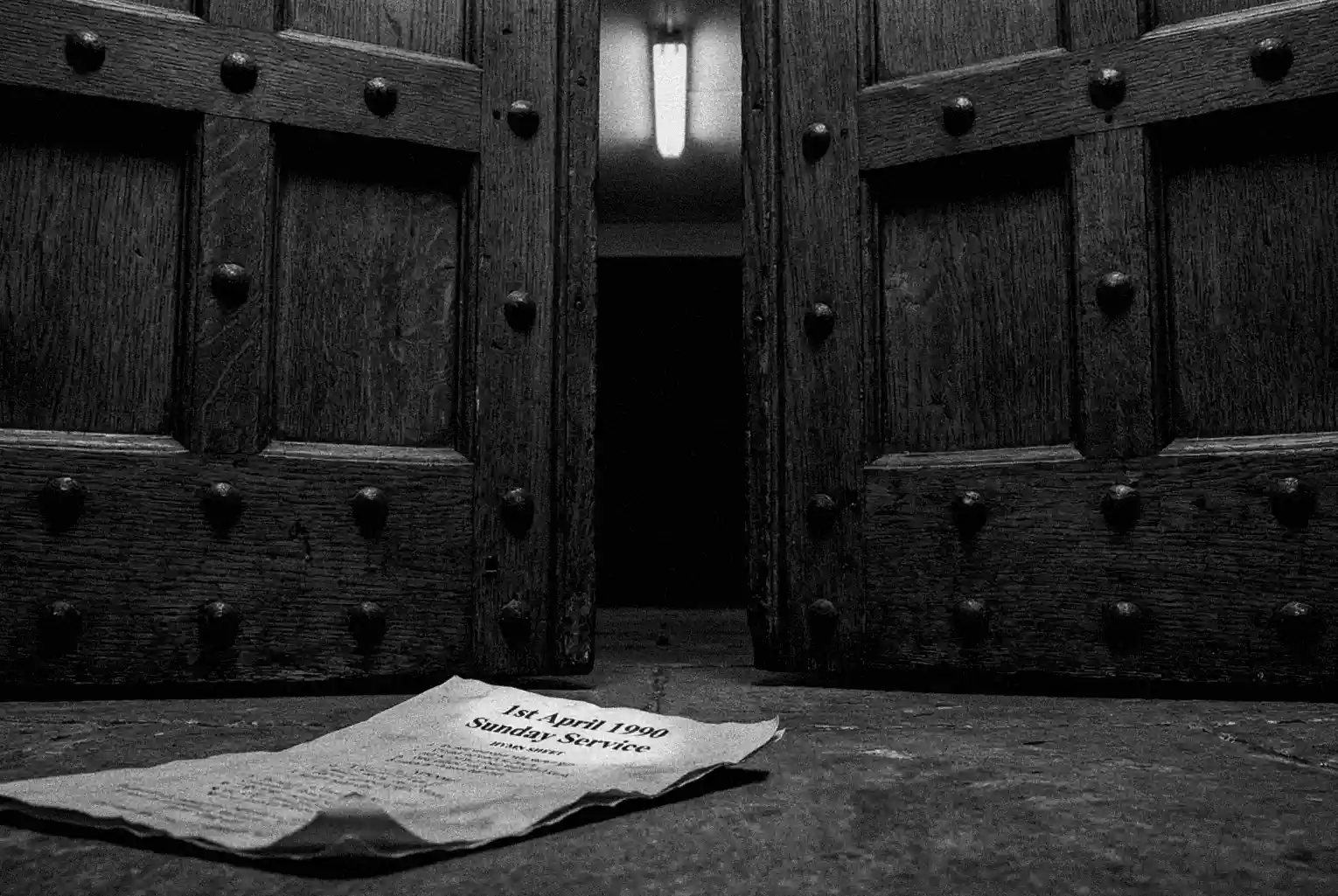
On the morning of 1 April 1990, staff at Strangeways quietly kept vulnerable prisoners away from the chapel because they expected violence. Minutes later, they allowed about 300 prisoners to enter that same space without being searched, including men later named as key ringleaders. Brendan O’Friel would later describe the outbreak as an unanticipated ‘explosion of evil’, but the actions taken on the wings before 11.00 am point to prior warning and a breakdown much lower down the chain.
Data Manifest
- Primary Investigation: The operational breakdown and ignored threat intelligence preceding the 1 April 1990 Strangeways Prison riot in Manchester.
- Key Anomalies Documented: Prior intelligence naming the chapel takeover date and ringleaders was not formally escalated via Security Information Reports; staff evacuated vulnerable prisoners from chapel due to expected violence yet allowed 300 unsearched inmates to enter; control room logs and decisions during the first 55 minutes remain unaccounted for in public records.
- Primary Sources Utilised: The 1991 Woolf Report (Cm 1456); Prison Reform Trust 1990 riot summary findings; Hansard Parliamentary records (April 1990); retrospective accounts from Governing Governor Brendan O'Friel; Centre for Crime and Justice Studies operational analyses; HM Prison Service intelligence grading data (1990); the Billy Wright Inquiry Report; the 1991 CPT Report to the United Kingdom Government.
Glossary of Terms
- Security Information Report (SIR): A standard internal document used by prison staff to formally log intelligence, warnings, or suspicious behaviour.
- Slopping out: The historical, unsanitary practice requiring inmates to manually empty their own waste buckets each morning due to a lack of in-cell plumbing.
- Duty Officer: The governor-grade officer responsible for operational command during a specific shift or incident window.
The Accepted History vs. The Narrow Gap
The standard account of Strangeways comes from Lord Justice Woolf’s inquiry, published on 31 January 1991. Woolf did not struggle to find reasons for revolt. The prison system was dangerously overcrowded and lacked any credible grievance process for inmates. Strangeways itself still relied on ‘slopping out’, the practice of prisoners emptying waste buckets by hand because cells had no toilets. Men were held two or three to a cell built for one. That was not a minor complaint. It shaped daily life.
Woolf’s broader conclusion changed the way the British state talked about prisons. The old emphasis on security and control was no longer enough on its own. Justice had to sit alongside it. That meant basic dignity, some sort of fair grievance process and living conditions that did not grind people down every day. On those points, the historical argument is settled.
The broader structural explanation is entirely valid, yet it obscures a distinct operational collapse. Squalid conditions explain why a prison might erupt. But they do not answer how explicit intelligence regarding the upcoming chapel protest was effectively swallowed by the system. The timeline shows local staff taking defensive action on Sunday morning, even as the executive suite remained completely unaware of the threat.
This operational gap requires a closer look. Following the siege, the political establishment preferred to address the vandalism rather than the ignored warnings. Home Secretary Kenneth Baker proposed a new ten-year sentence for prison mutiny. That legislative push fixed public attention on the riot itself. It completely diverted scrutiny away from the breakdown in command on the wings during the final weekend of March 1990.
Systemic Explanation vs. Operational Reality
| Focus Area | The Accepted Systemic Narrative | The Narrow Operational Focus |
|---|---|---|
| Core Catalyst | Spontaneous explosion of frustration driven by chronic overcrowding and the degrading practice of 'slopping out'. | A planned and rehearsed uprising with explicit prior warnings naming the date, location, and specific ringleaders. |
| Threat Awareness | The riot was an unanticipated 'explosion of evil' that caught the facility entirely by surprise. | Ground-level staff possessed explicit verbal intelligence days in advance, but failed to translate it into formal SIRs. |
| Pre-Riot Actions | Staff managed standard routines until the facility was suddenly overwhelmed during the Sunday service. | Staff executed local defensive manoeuvres by evacuating vulnerable prisoners while simultaneously allowing 300 unsearched inmates to gather in the chapel. |
Command Culture and the Administrative Bottleneck
Strangeways in 1990 sat inside a rigid hierarchy. Governor grades occupied the executive offices. Uniformed officers ran the landings. They unlocked cells, moved prisoners and dealt with the daily pressure face-to-face. On paper, that structure should have helped intelligence travel upwards. In practice, it could trap information halfway.
A Security Information Report, usually shortened to SIR, was the formal way to pass threat intelligence through the system. Any member of staff could use one to record warnings, suspicious conduct or information from informants. Once written, the report should go to the security department and on to the Governing Governor. That was the mechanism designed to turn gossip, rumour or raw warning into an actionable security picture.
The problem is that the warning appears to have stayed verbal. Retrospective accounts say officers received dozens of messages in March 1990 about a protest planned for 1 April in the chapel and that prisoners would be ‘tooled up’, meaning armed with improvised weapons.
The key failure was a catastrophic lack of paperwork rather than missing intelligence. No surviving SIR has surfaced that carried those warnings to O’Friel before the riot. That fits the prison culture described by later observers. Strangeways was said to be a ‘screws nick’, a place where uniformed officers held the real operational grip. If that culture was as strong as described, officers may have chosen to handle the threat locally instead of feeding it into the formal chain. That is not proof of sabotage. It points more towards data siloing and systems failure, where information exists but never reaches the person with the authority to act on it.
The SIR Pathway and the Administrative Bottleneck
Prison Officers (Landing Staff): Officers gather dozens of verbal warnings in March 1990 predicting an armed protest in the chapel on 1 April.
Senior Officers (Middle Management): Uniformed supervisors intercept the verbal warnings but fail to translate them into formal Security Information Reports (SIRs).
Security Department: The collator is intended to log the formal SIRs to map the facility's threat level. The documentation never arrives.
Governing Governor: Without the formal SIRs, Brendan O'Friel remains completely in the dark regarding the specific intelligence, preventing any executive defensive planning.
Testing the Pre-Riot Intelligence
The warnings described in later accounts were unusually specific. They were not vague claims that the prison felt tense. They allegedly named the date, the location and some of the men expected to lead the protest. Paul Taylor, a remand prisoner, was one of the names later associated with the takeover of the chapel. If officers had that level of detail before Sunday morning, the failure sits squarely in reporting and response, not in intelligence gathering.
The most striking prelude came on Saturday, 31 March 1990. During a film screening in the chapel, a reported ‘dummy run’ took place. According to later witness accounts, Paul Taylor made an inflammatory speech in front of other prisoners. That should have set off alarms. A rehearsal in the same room used the next day for the chapel service is not background noise.
Yet O’Friel later said his Saturday had been entirely ‘ordinary’. That detail matters because it marks the split between the wings and the executive office. If the dummy run happened as later described, the Governor did not hear about it in time.
No contemporaneous incident report reproduced in the available material closes that gap. The trail ends with retrospective testimony. That leaves a sharp contradiction. Either the rehearsal was seen and not escalated, or it has been overstated after the fact. The available material leans heavily towards the first explanation, but the absence of a surviving report means the point remains partly dependent on later witness recollection rather than a dated document from 31 March itself.
The Events of Saturday, 31 March 1990
-
31 March 1990
The Chapel 'Dummy Run'
During a film screening in the prison chapel, inmates conduct a rehearsal for the riot. Remand prisoner Paul Taylor delivers an inflammatory speech to the gathered prisoners.
-
Post-Incident
Management Notification Failure
Staff on duty witness the rehearsal but do not report the incident to the executive management. The event is not formally logged as a security threat.
-
Retrospective Account
An 'Ordinary' Day
Because the intelligence is not escalated, Governing Governor Brendan O'Friel later states on the record that his Saturday was entirely 'ordinary', confirming his total lack of prior knowledge regarding the rehearsal.
The 1 April Threat Assessment Paradox
On the morning of Sunday, 1 April 1990, staff took one precaution that gives the game away. They kept segregated and vulnerable prisoners away from the chapel service. Officers Duffield and Collins are named in the available material as carrying out that local evacuation. Staff do not remove vulnerable men from a routine religious service unless they think violence may break out.
Here is where the operational logic completely collapses. Just minutes after moving those vulnerable men out of harm’s way, the same staff allowed roughly 300 standard inmates to walk straight into the main service. Nobody was patted down for weapons. That entering crowd included the specific ringleaders named in the earlier intelligence. When questioned later, officers justified the lapse by claiming a full search was logistically impractical, adding that they did not want to infringe on the inmates’ religious freedoms.
Fair enough, except the earlier decision had already interfered with the normal running of the service because staff feared violence. The prison was not behaving as though it expected a peaceful morning.
The resulting contradiction is hard to ignore. The intelligence was credible enough to justify protecting specific targets, yet somehow not serious enough to warrant searching the main crowd. This looks like a classic local containment mindset. The uniformed staff on duty seemingly believed they could manage the danger internally without triggering a full command response. They grossly miscalculated the scale of the threat. Once the chapel filled up, their narrow defensive tactic collapsed almost immediately.
The 1 April Threat Assessment Paradox
Simultaneous and contradictory security decisions made prior to the chapel service.
Threat Awareness Signals
Staff execute a localised evacuation, banning segregated and vulnerable prisoners from the chapel.
A clear, undeniable awareness that a violent incident is imminent.
Permissive Actions Executed
Staff permit 300 inmates, including specifically named ringleaders, to enter the chapel unsearched.
Searches are deemed logistically 'impractical' and staff cite a reluctance to infringe on religious freedoms.
The Missing Hour
The riot began during the 11.00 am service on 1 April. Chaplain Noel Proctor was conducting the sermon when Paul Taylor seized the microphone. According to the material gathered later, he preached resistance to the system, and another prisoner shouted, ‘Fuck your system, fuck your rules.’ Weapons were then produced and officers lost control of the chapel.
O’Friel did not arrive until 11.55 am. By then, nearly an hour had passed since the takeover began. On arrival, he ordered a Governor 5, a governor-grade duty officer, to secure the remand prison gates. He later stated that the remand prison could have been held with an earlier order. That is not a minor remark. It is effectively an admission that the critical window for containment had already been wasted before he got there.
The missing piece is the control room between 11.00 am and 11.55 am. During this massive window, the control room operated without the executive leader. We completely lack the unredacted radio logs from the control room for that period, leaving us in the dark about what specific decisions were made by the unnamed Duty Officer during those critical 55 minutes. Who was giving orders? Who decided when to withdraw? Who chose not to secure the remand area sooner?
Without them, the most important command decisions of the day sit in a blank space. That absence matters because it prevents a full assignment of responsibility. The prison was not lost at 11.00 am by magic. It was lost through a sequence of choices made in that first hour, and the surviving public account does not give a minute-by-minute chain for those choices. No record exists here after O’Friel’s late arrival that explains the earlier commands in full.
The Missing Hour - Control Room Timeline
-
11:00 AM
The Chapel is Taken
During the Sunday sermon, Paul Taylor seizes the microphone and preaches resistance. Inmates produce weapons and take control of the chapel space.
-
11:01 AM to 11:54 AM
The Opaque Response
The unnamed Duty Officer runs the control room. We lack the unredacted radio logs detailing the specific commands given during this window, leaving the early withdrawal and containment decisions entirely blank in the public record.
-
11:55 AM
Late Executive Command
Governor Brendan O'Friel arrives and immediately orders a 'Governor 5' to secure the remand prison gates. The inmates breach the wing before the order can be executed. O'Friel later notes the wing could have been held if the order was given half an hour earlier.
The Media Vacuum and Fabricated Atrocities
As the siege dragged on, the press gathered outside the prison walls and filled the air with rumour. Some reports claimed prisoners had been castrated. Others said bodies had been cut up and flushed through the sewers. Those sensational stories were entirely false.
Woolf dealt with them directly. He found that the atrocity stories had no basis in fact. Violence did occur in the early phase of the riot, especially against sex offenders, but the large-scale torture stories presented to the public did not happen. Independent assessments, including the 1991 CPT Report to the United Kingdom Government, documented the actual physical aftermath and separated the real violence from the media fabrications.
That distinction matters. A prison riot does not need invented horrors to be serious.
The press failure also distorted the historical picture. Once sensational claims harden in public memory, later corrections rarely catch up. In this case, the media vacuum outside Strangeways became a machine for speculation. It turned uncertainty into an apparent fact and pushed the real operational questions further into the background.
That secondary fog still hangs over the event. Many people remember Strangeways as a scene of medieval brutality because that was the version shouted loudest at the time. Woolf’s findings stripped out those fabrications, but the cleaner account never travelled with the same force.
The Media Vacuum vs. Verified Findings
| Subject | Media Fabrication | The Woolf Report Reality |
|---|---|---|
| Systematic Mutilation | Early reports broadcasted claims that prisoners had been systematically mutilated and castrated during the takeover. | Found to be entirely false. While targeted inter-prisoner violence did occur in the initial hours, grand-scale torture never happened. |
| Hidden Fatalities | The press claimed that bodies had been chopped up and flushed down the prison sewers. | Debunked. The atrocity stories had no basis in fact. |
| Information Flow | The media established encampments outside the walls, filling the information vacuum with unconfirmed rumour and speculation. | The public inquiry concluded the press fell into a serious ethical error by presenting unconfirmed speculation as fact, polluting the historical record. |
The Silo Effect Theory
The strongest explanation in the available material points to the silo effect rather than deliberate inaction by staff. Information gathered on the landings stayed on the landings. Officers appear to have trusted their own local handling of the threat more than the paperwork route designed to alert security staff and the Governor. In a culture where uniformed staff saw themselves as the people who actually ran the jail, that makes grim sense.
There is no proof here that anyone in management wanted the prison to fall. No internal memo has surfaced saying the riot should be allowed to happen. No whistle-blower account in the available material describes a plan to force reform by letting matters explode. That theory has surface appeal because staff had every reason to be angry about overcrowding and conditions, but it breaks down on motive. The officers on duty were the people most likely to be assaulted once control failed. One prison officer would later die in the wider wave of prison unrest that followed.
The available facts point to a chain of reporting failures and misjudgements inside the prison. Officers heard warnings. The middle ranks did not turn them into formal SIRs. A reported rehearsal in the chapel was not carried upward through the reporting chain. Vulnerable prisoners were protected, but the main gathering went ahead. The Governor arrived late and said the remand wing might have been saved with an earlier order.
Each part points towards a chain of misjudgements inside a divided institution. That does not let the system off the hook. Quite the opposite. A prison built on overcrowding, sloping out, and poor legitimacy was already unstable. Add a command culture where warnings can stop at the senior officer level, and you have a structure ready to fail at the worst possible moment. Woolf addressed the wider rot. The narrower collapse on 31 March and 1 April still looks like a case of systems failure, data siloing and evidence mishandling.
Theory Test Matrix: Operational Collapse
| Working Theory | Evaluation Status | Verified Evidence | Evidence Gaps & Reality Check |
|---|---|---|---|
| Systems Failure & Data Siloing (The 'Silo Effect') |
Confirmed | A rigid, adversarial culture existed between landing staff and executive grades. Uniformed officers intercepted warnings and executed local defensive actions (evacuating vulnerable inmates) but bypassed the formal SIR reporting process. | None. This aligns with the sociological reality of the 1990 prison estate and the physical timeline of events on the wings. |
| Deliberate Inaction (Intentional Sabotage) |
Rejected | Staff had previously engaged in industrial action to highlight severe overcrowding, establishing a clear desire for government intervention. | Zero Tier 1 Proof. No internal emails, memos, or whistle-blower accounts exist detailing a plan. Ground-level staff possessed no logical incentive to engineer a violent uprising that placed their own lives in immediate, lethal danger. |
Sources
Sources include: the official 1991 report of the public inquiry into prison disturbances (The Woolf Report, Cm 1456); the Prison Reform Trust’s summary of findings regarding the 1990 riots; historical news archives and investigative reporting from The Guardian (1990–2010); published witness testimony and retrospective accounts from former Governing Governor Brendan O’Friel; academic and operational analyses including ‘Strangeways 1990: A serious disturbance’ published by the Centre for Crime and Justice Studies; UK Parliamentary records from Hansard (April 1990) regarding the initial Statement on Strangeways Prison; the final report of the Billy Wright Inquiry regarding historical prison command structures; operational logs and internal intelligence grading data from HM Prison Service (1990); and investigative retrospectives detailing the ‘dummy run’ and the timeline of the chapel takeover.
Claim-Source Matrix
| Core Finding | Primary Source Document | Status |
|---|---|---|
| Staff received specific verbal warnings in March 1990 of a 1 April chapel protest led by armed inmates, but no formal Security Information Report surfaced to alert executive command. | HM Prison Service Intelligence Grading Data (1990); Retrospective Accounts of Brendan O'Friel | Verified Record Gap |
| An inflammatory speech and reported 'dummy run' by remand prisoner Paul Taylor occurred in the chapel on Saturday, 31 March 1990, without appearing on contemporaneous incident reports. | Investigative Retrospectives on the Chapel Takeover; Brendan O'Friel Testimony | Unresolved Contradiction |
| On Sunday morning, Officers Duffield and Collins evacuated vulnerable inmates from chapel due to anticipated violence, yet allowed 300 unsearched prisoners inside minutes later. | The Woolf Report (Cm 1456); Published Witness Testimony | Verified Operational Collapse |
| Governor O'Friel arrived at 11.55 am, 55 minutes after the riot began, later stating an earlier order could have secured the remand prison gates. | Brendan O'Friel Published Accounts; HM Prison Service Operational Logs (1990) | Verified Timeline Conflict |
| Sensational media reports of castrations and dismemberment were entirely unfounded, concealing real early-stage violence against sex offenders. | The Woolf Report (Cm 1456); 1991 CPT Report to the United Kingdom Government | Verified Public Deception |
| The breakdown stemmed from local data siloing on the landings and rigid command structures, not deliberate staff sabotage or institutional desire for collapse. | The Woolf Report (Cm 1456); The Billy Wright Inquiry Report | Verified Systemic Breakdown |
What we still do not know
- The Names of the Middle Managers: The public record does not explicitly name the specific Senior Officers who intercepted the verbal warnings on the wings but failed to file the Security Information Reports.
- The Missing Hour: We lack the exact control room radio transcripts from 10:30 AM to 12:30 PM. The specific orders given by the unnamed Duty Officer before Governor O'Friel arrived at 11:55 AM remain opaque.
- The Extent of the 'Dummy Run': We know Paul Taylor gave an inflammatory speech in the chapel on 31 March. We do not know the exact number of staff present or their specific operational justification for viewing a riot rehearsal as a non-reportable event.
Comments (0)