
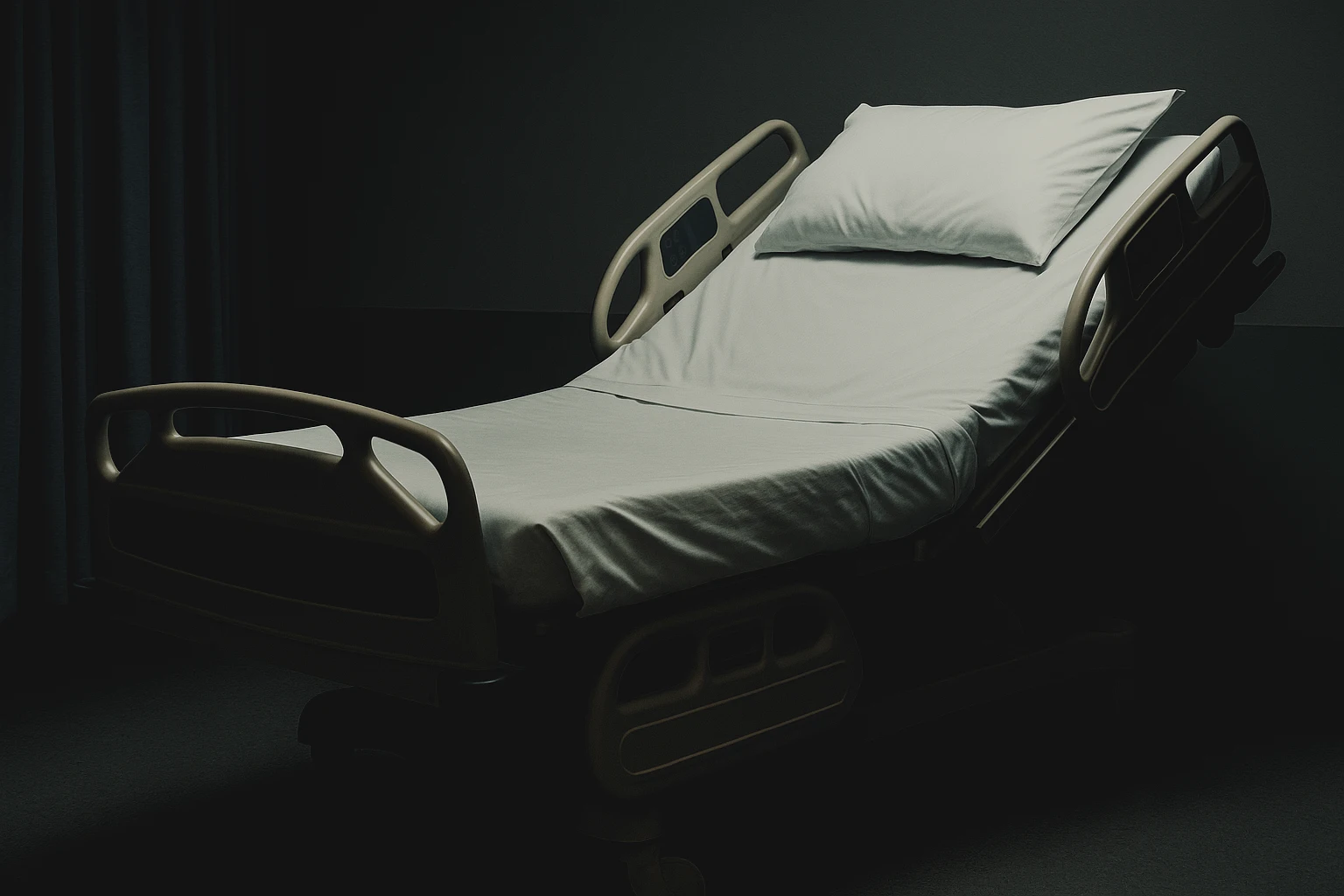
For years, a steady stream of space medicine papers detailed gruelling, long-duration human bed rest trials. The printed data looked incredibly consistent across completely different volunteer groups.
But then the physical reality broke the illusion.
The biomedical laboratories named on the title pages did not actually exist, and the exact same datasets had simply been copied from one paper to the next.
Data Manifest
- Primary Investigation: An examination of published space medicine research by Dr Balwant Rai, evaluating evidence of non-existent biomedical laboratories, duplicated human subject trial datasets, textual plagiarism, and bypassed university ethical oversight.
- Key Anomalies Documented: The Kepler Space Institute cited as a US laboratory despite Florida corporate records showing a commercial office suite with no physical research facilities; the JBR Institute cited as a primary Indian research base with no registered campus or staff; identical demographic averages, salivary biomarkers, and baseline cortisol data duplicated between a 2009 one-day head-down tilt trial and a 2011 six-week trial; a mathematically impossible 10.8 per cent calculation from a 20-subject sample (equating to 2.16 people); textual plagiarism from a 1998 exam stress paper; and six-week human trial ethical approval attributed to a private pathology clinic (Jain Diagnostic Center) instead of an Institutional Review Board.
- Primary Sources Utilised: Sunbiz Florida corporate registry records; independent science integrity analysis and correspondence from Elisabeth Bik (Science Integrity Digest); questioned and retracted space medicine journal articles across major publishers including Elsevier and Wiley; and official institutional statements from Kepler Space Institute officials and KU Leuven.
Core Terminology
- Head-down tilt: A physical posture used in experiments to mimic the fluid shifts that happen in an astronaut's body during spaceflight.
- Salivary biomarkers: Chemical indicators found in spit that measure physical stress or immune system responses.
- Institutional Review Board: A formal committee designated to approve and monitor research involving human subjects to ensure safe practices.
- Open-access journal: A scientific publication where articles are freely available to readers online, sometimes funded by fees paid by the authors themselves.
The Phantom Laboratories
Dr Balwant Rai produced an extensive portfolio of space medicine research. His papers listed affiliations that suggested access to top-tier biomedical facilities. One such base was the Kepler Space Institute (KSI), frequently cited as the U.S. laboratory hosting his work.
But the address listed on the official Sunbiz Florida corporate registry points to a commercial office suite in Bradenton.
KSI officials later provided a formal statement confirming he never worked there. They had no physical laboratory to support human trials. His Indian research base, the JBR Institute, presented a similar problem. Papers placed this entity in Punjab.
Local directories hold no registration for any such campus or staff. Nobody has located a single property deed or registered address for the JBR Institute.
Facility Status Verification
- Claimed US Base: Kepler Space Institute (KSI) listed as hosting human space medicine trials.
- Physical Reality: Florida Sunbiz corporate registry records point to a commercial office suite in Bradenton. KSI officials formally confirmed the researcher never worked there and have no physical laboratory.
- Claimed Indian Base: JBR Institute listed in Punjab.
- Physical Reality: Local directories hold no registration for any such campus or staff, and no property deeds exist.
The Recycling of Human Subjects
Science integrity blogger Elisabeth Bik noticed something strange in the printed data tables of these papers. A 2009 study published in the ‘Indian Journal of Dental Education‘ detailed a one-day head-down tilt trial. Two years later, the ‘International Journal of Dentistry‘ published a six-week trial involving a completely different timeframe.
The numbers matched exactly.
Bik’s analysis showed the 2011 paper contained identical demographic averages and salivary biomarkers to the 2009 study. Statistically, pulling the exact same average weight and age across different volunteer groups is impossible. Somebody copied the baseline dataset from a short trial and pasted it into a paper claiming a six-week continuous experiment.
No researcher has yet produced the original raw data files to explain the duplication.
Dataset Duplication Analysis
| Data Parameter | 2009 Dental Education Study | 2011 Journal of Dentistry Study |
|---|---|---|
| Stated Protocol Duration | One-day head-down tilt trial | Six-week continuous experiment |
| Demographic Averages | Baseline values recorded | Identical average age and weight |
| Salivary Biomarkers | Baseline cortisol measurements | Identical cortisol measurements |
| Raw Data Availability | Unproduced | Unproduced |
The Ethics Workaround
Prolonged human experiments require strict ethical oversight. Usually, an Institutional Review Board signs off on the protocol to monitor safety. The 2011 bed rest study bypassed this standard route.
The paper’s acknowledgements section contained a single typed line attributing ethical approval to the Jain Diagnostic Center in New Delhi.
This facility is a small private pathology clinic. A diagnostic centre holds no authority to approve a massive six-week clinical trial on healthy volunteers. When questioned about the lack of university oversight, some institutions pointed to administrative rules rather than investigating. KU Leuven cited its six-year statute of limitations on misconduct complaints. This technicality allowed the papers to remain unexamined by a major university.
We still have no national ethics registry entry for any of these trials.
Ethical Approval Routing Failure
Prolonged human experiments require strict oversight and monitoring by an official institutional Review Board.
The 2011 bed rest paper attributes ethical sign-off to a typed single line referencing the Jain Diagnostic Center in New Delhi.
The designated facility is a small private pathology clinic holding zero authority to approve six-week clinical trials on healthy volunteers.
KU Leuven cited its six-year statute of limitations on misconduct complaints, leaving the papers unexamined by the university.
The Plagiarism and Improbable Math
The data anomalies extended beyond duplicated tables. A 2017 study on a North Indian population reported a result of 10.8 per cent from a total sample size of 20 subjects.
Bik flagged this calculation as mathematically impossible.
A 10.8 per cent share of 20 equates to 2.16 people. You cannot have a fraction of a human subject in a clinical trial. Textual issues also surfaced during Bik’s external review. She identified a 2012 wound healing study that contained passages copied directly from a 1998 exam stress paper.
The plagiarised paragraphs matched word-for-word on the page. We don’t know how the peer reviewers missed a textbook mathematical error alongside lifted text.
Statistical and Textual Anomalies
The Improbable Percent Calculation
Reported share of a North Indian population sample consisting of exactly 20 total subjects.
Mathematical Discrepancy
A 10.8 per cent share of 20 requires a fraction of a human subject, which is structurally impossible within a clinical trial framework.
Textual Overlap Verified by External Review
Passages from a 2012 wound healing study were found to match word-for-word with sections of a 1998 exam stress paper.
Editorial Silence
The scientific community relies on journals to correct the record when fraud is exposed. On 27 May 2019, Bik sent detailed reports of misconduct to journal editors and integrity officers.
The response from major publishers like Elsevier and Wiley was silence.
These emails sat unanswered in editors’ inboxes for months. A few open-access journals eventually removed some papers without public explanation. But the breakdown of post-publication review left the majority of the disputed research intact.
Institutions have not released any internal investigative reports detailing what went wrong.
Post-Publication Integrity Timeline
-
27 May 2019
Misconduct Reports Dispatched
Detailed reports highlighting mathematical errors and data duplication were sent directly to journal editors and institutional integrity officers.
-
Months Unanswered
Publisher Inaction
Emails addressed to major publishers, including Elsevier and Wiley, remained unacknowledged in editorial inboxes with no formal investigations launched.
-
Current Status
Partial Open-Access Removal
A small number of open-access journals quietly removed specific papers without issuing formal public corrections, leaving the majority of disputed data intact.
Source
Sources include: Florida Department of State Sunbiz corporate registry records for the Kepler Space Institute; independent data audits and forensic reports published in ‘Science Integrity Digest’ (2019-2020); academic article text from the ‘Indian Journal of Dental Education’ (2009), the ‘International Journal of Dentistry’ (2011), and the ‘Journal of Oral Science’ (2011); official administrative policy guidelines from the KU Leuven Research Integrity Reporting Desk; and formal institutional statements issued by cited research facilities.
Claim-Source Matrix
| Core Finding | Primary Source Document | Status |
|---|---|---|
| Kepler Space Institute lacks physical laboratory infrastructure to run human trials. | Sunbiz Florida Corporate Records & KSI Official Statement | Confirmed |
| JBR Institute in Punjab has no registered campus address, staff entries, or property deeds. | Local Directory Audit & Property Registry Records | Confirmed |
| Identical demographic and salivary biomarker metrics reused across different trial timeframes. | Science Integrity Digest 'The Space Dentist' Analysis | Confirmed |
| A prolonged six-week continuous trial bypassed university ethics loops using a private diagnostic clinic. | Indian Journal of Dental Education & International Journal of Dentistry | Confirmed |
| KU Leuven refrained from examining papers by invoking an administrative rule limit. | KU Leuven Research Integrity Reporting Desk Guidelines | Confirmed |
| A 2017 population study reported a 10.8 per cent share out of 20 total subjects (2.16 people). | Science Integrity Digest Impossible Fractions Audit | Confirmed |
| Misconduct alerts were transmitted to publishers on 27 May 2019 rather than 28 May 2019. | Science Integrity Digest Update Log | Contradicted |
What we still do not know
- Physical coordinates and locations where the claimed long-duration human bed rest trials took place.
- Primary raw data files, physical laboratory logs, and original research notebooks.
- The names, signatures, and verified ethical consent forms of the human volunteer cohorts.
- Specific peer review screening records that failed to identify fractional human calculations.
- The internal corporate or academic correspondence among European co-authors regarding their verified contributions.
Comments (0)