Skip to content

The Pasty Paradox

A forensic audit of the Cornish Pasty PGI

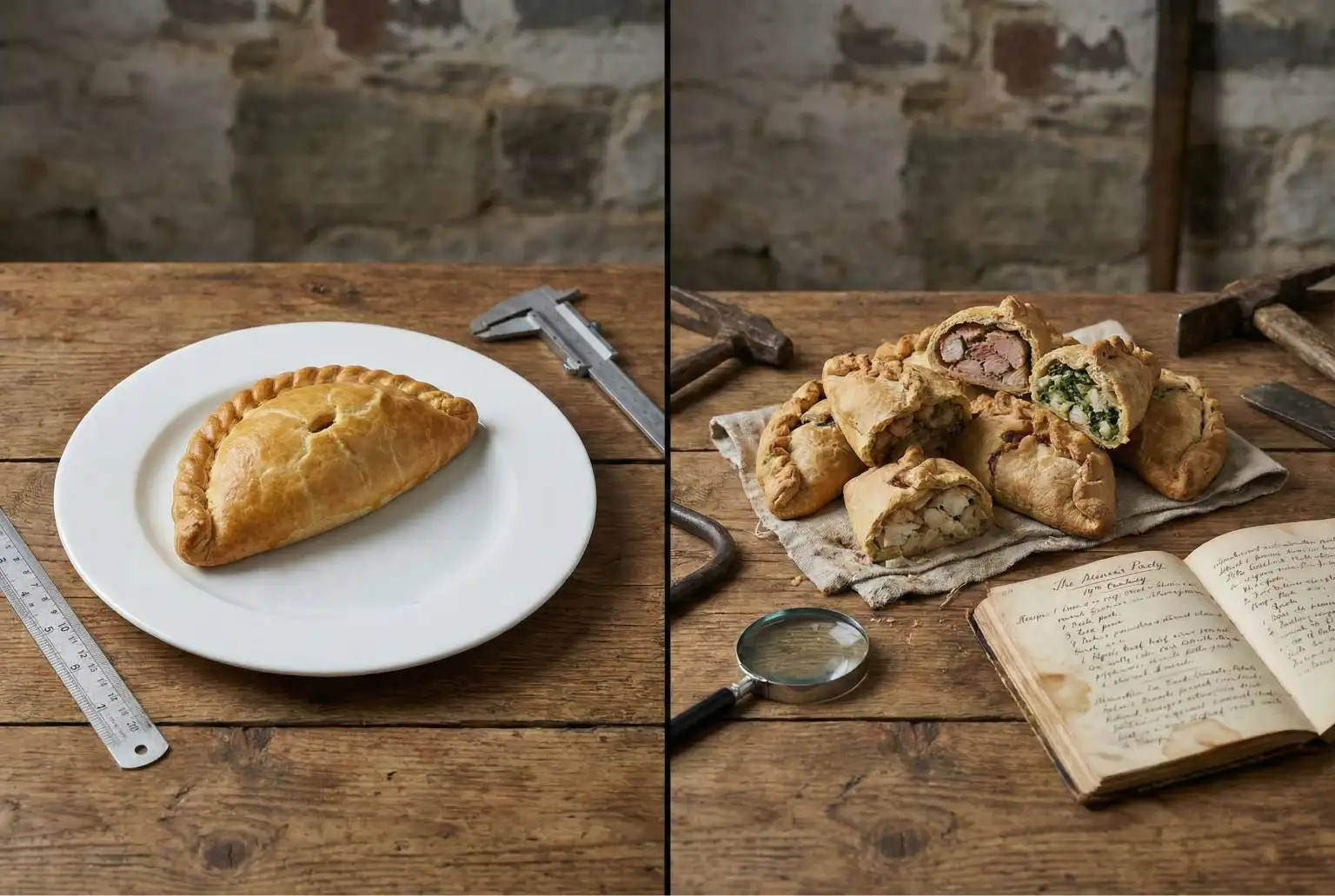
In 2011, the European Commission ruled that a genuine Cornish Pasty must contain beef, swede, potato, and onion. This legal definition secured Protected Geographical Indication (PGI) status and ring-fenced a £300 million industry. It also effectively outlawed the historical reality of the Cornish miner.

This three-part investigation audits the divergence between the ‘State Pasty’ protected by law and the ‘Miner’s Pasty’ found in the archives. We analyse 19th-century wage logs that made beef a mathematical impossibility, photographic evidence that contradicts the ‘arsenic handle’ safety theory, and a 1510 municipal ledger from Devon that challenges the origin of the name itself.

The files reveal that the PGI status protects a brand rather than a history. The modern definition is a simulation of a feast day meal presented as a daily standard.

Frequently Asked Questions

  • What is the Cornish Pasty PGI?
    PGI stands for Protected Geographical Indication. It is an EU and UK scheme that protects a product name tied to a place and a defined method. The scheme defines exactly what can be sold as a ‘Cornish Pasty’ and mandates that assembly must take place within the county.
  • Does the PGI prove the Cornish pasty is historically ‘authentic’?
    No. It proves the existence of a modern legal specification and the right to enforce it. Whether that specification matches historical practice is a question of evidence, which is what this investigation tests.
  • Did miners really use the crimp as a disposable handle because of arsenic?
    This is the prevailing narrative. However, we check this claim against archival photographs and mining lunch practices, specifically the use of ‘crib bags’. We determine whether the handle story is a documented safety procedure or retrospective folklore.
  • Why does the investigation focus on ingredients like beef and pork?
    The PGI’s rules turn ingredients into hard borders. If wage logs and diet records indicate mandatory ingredients were unaffordable for miners, the protected recipe likely reflects a ‘feast-day’ simulation rather than the everyday meal it claims to represent.
Back To Top