
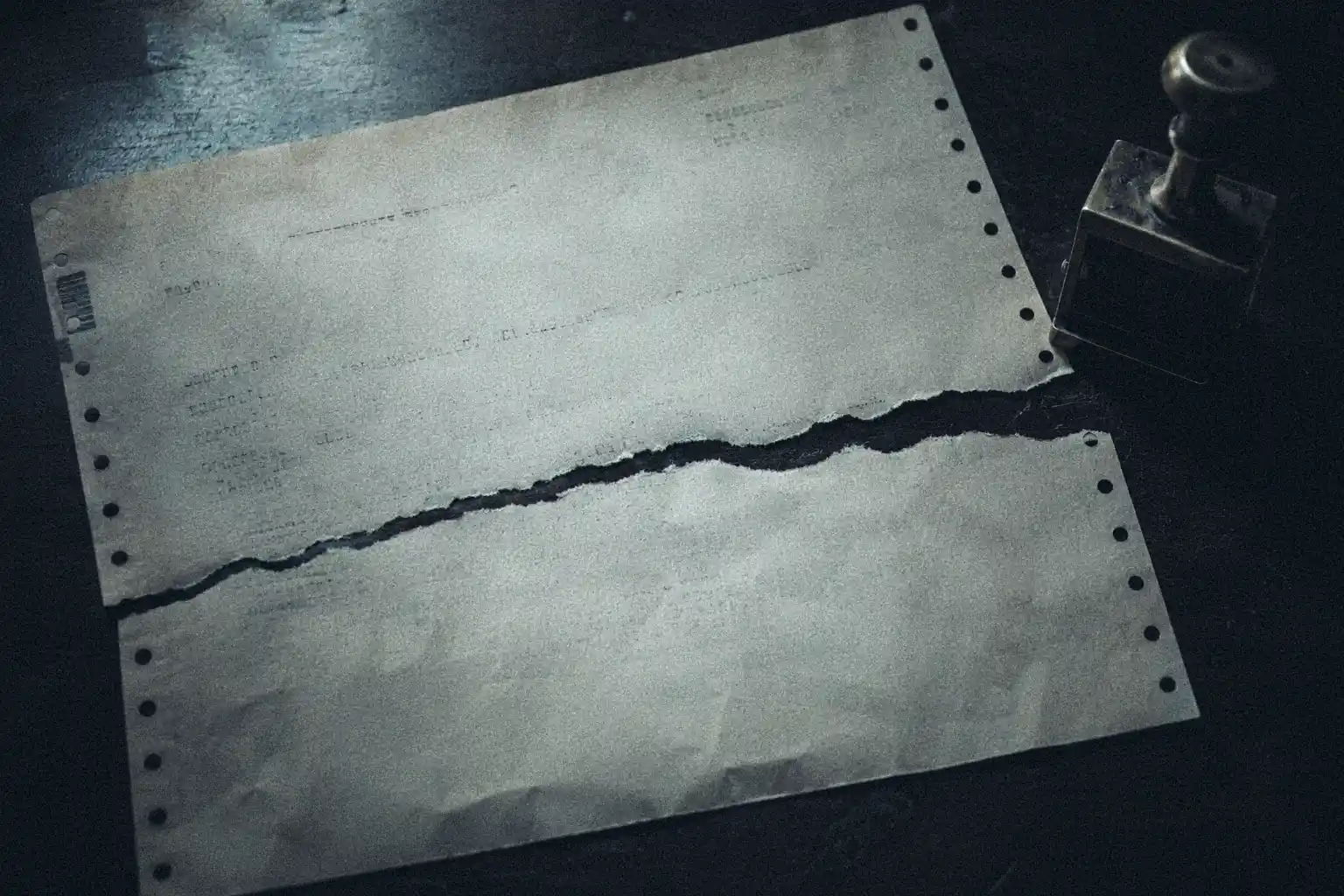
The Bureau of African Affairs archive was said to have been burnt to ash by soldiers on the morning of 24 February 1966. A large portion of it sits today, catalogued, on the shelves of the George Padmore Research Library in Accra. The British High Commission that reportedly directed the operation had been shut for seventy days before the first shot was fired.
Data Manifest
- Primary Investigation: The fate of the Bureau of African Affairs archive following the 1966 Ghana coup.
- Key Anomalies Documented: A direct chronological contradiction between the public narrative of British-directed destruction and the documented diplomatic rupture that occurred 70 days prior. Accession logs confirm the files were impounded, not incinerated.
- Primary Sources Utilised: Padmore Library accession registers, declassified UK Foreign and Commonwealth Office files (FCO 168/1861), CIA diplomatic intelligence reports (DOC_0000652174).
Terminology Reference
- Bureau of African Affairs (BAA): Kwame Nkrumah's specialist office for African policy, running intelligence and logistical support outside the regular civil service.
- Information Research Department (IRD): A secret Foreign Office unit conducting covert propaganda against non-aligned governments.
- 'Mailing in' operation: A propaganda tactic posting forged leaflets into a target country from third countries to disguise their origin.
- Protecting power: A neutral third state managing diplomatic interests when normal relations have broken down (e.g., Canada acting for the UK).
- National Liberation Council (NLC): The military and police junta that overthrew Nkrumah on 24 February 1966.
- Unilateral Declaration of Independence (UDI): Southern Rhodesia's 1965 declaration of independence without London's agreement.
Did the NLC Burn the BAA Archive?
Two related claims sit under the original mandate of this investigation. One is that the National Liberation Council junta burnt the Bureau of African Affairs archive after seizing power in February 1966. The other is that British personnel oversaw or directed the burning.
Neither claim is supported by the accession registers.
Accession records at the George Padmore Research Library in Accra list a substantial portion of the Bureau’s original files, formally catalogued in the late 1980s by two named researchers, Jan-Bart Gewald and Joseph Justice Torton Mensah. The papers were not incinerated. They were impounded.
A second problem is chronological. Ghana had already severed diplomatic relations with the United Kingdom on 16 December 1965, seventy days before the coup, over Britain’s refusal to use force against the Rhodesian regime. High Commissioner Harold Smedley had been expelled from Accra. West Africa desk registry logs for the coup week do not exist.
Closest to a documented British motive is A.W. Snelling’s letter of August 1961 to the Foreign and Commonwealth Office, in which he wrote that Britain would be ‘better off without’ Nkrumah. Read cold, it is a personal note of frustration from a serving High Commissioner, not an operational instruction.
The evidence does not identify a single originator of the destruction story. The claim recurs across secondary literature without a single primary source underneath it.
Public Claims vs. Archival Record
| Public Claim | Documentary Rebuttal |
|---|---|
| The National Liberation Council junta burnt the Bureau of African Affairs archive upon seizing power in February 1966. | Accession records at the George Padmore Research Library confirm the original files were impounded, preserved, and later formally catalogued. |
| British personnel oversaw or directed the burning operation. | Ghana severed diplomatic relations 70 days prior to the coup. The High Commissioner was expelled, shutting down standard West Africa desk reporting. |
History of the Bureau of African Affairs (1957–1966)
On 5 December 1957, the Office of the Adviser to the Prime Minister on African Affairs was established in Accra under George Padmore. It sat outside the regular civil service and reported to Nkrumah directly.
Padmore died in 1959. His office was renamed the Bureau of African Affairs, placed under A.K. Barden, and left reporting straight to the Prime Minister rather than through the Ministry of Foreign Affairs. Its function extended past traditional diplomacy. The Bureau gathered intelligence on colonial governments, ran propaganda across the continent, and supplied logistical support to liberation movements pushing against colonial and white minority rule in Southern Africa.
Kulungugu changed the tempo. After Nkrumah survived an assassination attempt at the border town of Kulungugu in August 1962, he closed Ghana’s frontiers and elevated the Bureau above conventional diplomacy.
The catalogue shows signs of physical disturbance. The Padmore Library index records that a large share of the surviving papers arrived in disordered bundles consistent with rough soldier handling, and the most sensitive armed-struggle support files are missing from that index.
Whether those missing files were removed by the NLC Special Branch, lost during the rough transfer to the Trade Union Congress building, or quietly culled before deposit at the library, none of the primary sources reviewed here settle the question.
Bureau of African Affairs: Institutional Evolution
-
5 December 1957
The Padmore Phase
The Office of the Adviser to the Prime Minister on African Affairs is established under George Padmore, reporting directly to Kwame Nkrumah outside the regular civil service.
-
1959
The Barden Phase
Following Padmore's death, the office is renamed the Bureau of African Affairs under A.K. Barden. It expands to gather intelligence and run propaganda operations.
-
August 1962
The Kulungugu Pivot
After an assassination attempt on Nkrumah at Kulungugu, Ghana's borders are closed and the Bureau is elevated above conventional diplomacy to supply logistical support to liberation movements.
British Intelligence & Nkrumah – Analyzing File FCO 168/1861
Founded inside the Foreign Office in 1948, the Information Research Department was set up to counter Soviet propaganda. By the mid-1960s its remit had broadened.
Nkrumah published Neo-Colonialism: The Last Stage of Imperialism in October 1965. In response, the Commonwealth Relations Office advised the IRD that it no longer needed to be inhibited by Ghana’s Commonwealth membership when conducting psychological warfare.
The catch was, one specific paper trail did exist before that. On 12 August 1964, a top-secret cable was sent from the Foreign Office to the British High Commission in Accra. It described a covert ‘mailing in’ operation, a propaganda tactic in which forged leaflets, dressed up to look as if they had been produced by local Ghanaian patriots, would be posted into Ghana from third countries to disguise the true origin.
Thousands of those leaflets went out. Kodwo Addison, Director of the Kwame Nkrumah Ideological Institute at Winneba, was named as a primary target of the campaign.
IRD operations against Nkrumah’s government, filed under reference FCO 168/1861 at The National Archives, was written by Sir John Ure on 6 May 1966. Ure described the campaign’s aim as creating ‘an atmosphere in which Nkrumah could be overthrown’.
That wording stops short of operational direction. It describes intent, not an operation on the ground.
The IRD was a propaganda and writing department, not a paramilitary unit. No declassified UK file reviewed in our investigation proposes physical action against the Bureau of African Affairs archive.
There is one more timing issue. Ure’s report is dated 6 May 1966. That is two months after Operation Cold Chop and after diplomatic relations had been restored in March. The document is retrospective, not operational.
Priority Briefings
New investigations, evidence checks, and unresolved questions from Veriarch, sent directly to your inbox.
Diplomatic Breakdown – The Ghana-UK Crisis (1965–1966)
Southern Rhodesia’s white minority government declared unilateral independence from the UK in November 1965. This action, known as UDI, provoked the Organisation of African Unity to demand a British military response against the Rhodesian regime.
Britain declined to send troops. Ghana broke diplomatic relations with the UK on 16 December 1965.
Harold Smedley, the resident High Commissioner in Accra, was expelled. Standard High Commission reporting to London stopped that week. The West Africa desk was left without its usual daily cable stream.
British diplomatic interests were transferred to the Canadian High Commission in Accra, acting as a protecting power. A protecting power is a neutral third state that manages another country’s diplomatic and citizen interests once normal relations have ended. Canada ran a ‘British Interests Section’ out of its Accra mission until relations were restored in March 1966.
One British contingent stayed put. The British Joint Services Training Team remained in country to fulfil existing training contracts, but its terms of service explicitly barred it from domestic political or military involvement.
None of the Canadian liaison logs that would establish exactly what the British Interests Section reported back to London during the coup week are found. Where those summaries are filed within the UK National Archives, or whether they were ever transferred from Ottawa at all, is unresolved.
The Diplomatic Rupture (Nov 1965 – Mar 1966)
-
November 1965
Unilateral Declaration of Independence
Southern Rhodesia's white minority government declares independence. The UK declines to send troops, provoking an Organisation of African Unity demand for action.
-
16 December 1965
Diplomatic Relations Severed
Ghana formally breaks relations with the UK. Resident High Commissioner Harold Smedley is expelled, halting standard daily cable streams to London.
-
Late December 1965
Protecting Power Transfer
British diplomatic interests in Accra are transferred to the Canadian High Commission, acting as a neutral protecting power.
-
24 February 1966
Operation Cold Chop
The Ghana Armed Forces launch a coup. Standard UK West Africa desk registry logs for this critical week do not exist.
-
March 1966
Relations Restored
The National Liberation Council restores normal diplomatic relations with the UK following the successful coup.
Operation Cold Chop – Tracking the Stolen Bureau Files
Operation Cold Chop was launched on 24 February 1966. The Ghana Armed Forces and Police Service moved against the capital while Nkrumah was in the air en route to Hanoi. Command sat with three men. Colonel Emmanuel Kotoka, Major Akwasi Afrifa and Police Commissioner John Harlley formed the National Liberation Council that took power.
Wanting the Bureau’s files was not the same as wanting to burn them. The junta needed the paperwork intact enough to be shown to the domestic public and to international observers as evidence of what Nkrumah’s men had been running across the continent.
Bureau staff were arrested between 24 and 28 February 1966. The records were impounded and moved in bulk to the Trade Union Congress headquarters in Accra.
From there the files were shifted again, this time to Burma Camp, the central military installation, where they were held for several years before being handed on to the Padmore Library. Formal cataloguing came in the late 1980s at the hands of Gewald and Mensah. Papers arrived in disordered bundles consistent with rough military handling, and the operational files supporting armed liberation struggles in Southern Africa are notably absent from the index.
The armed-struggle files vanished somewhere between the raid on 24 February and the deposit at the Padmore in the late 1980s. Two decades of custody, and no receipt to say who held what.
Bureau Files: Chain of Custody
Bureau Headquarters: Operations are raided and staff arrested. The NLC impounds the full archival record to seek evidence of continental covert operations.
TUC Building: Files are moved in bulk to the Trade Union Congress headquarters. Primary loss point: Operational files supporting armed liberation struggles vanish at this stage. Original handover receipts are missing.
Burma Camp: Remaining files are held at the central military installation for several years.
George Padmore Research Library: Surviving disordered bundles are deposited and formally catalogued by researchers Gewald and Mensah.
Historical Intelligence Gaps – The UK-Ghana Coup Record
Standard West Africa desk registry logs do not cover the coup period. The paper trail that would normally record the seizure of state assets in a Commonwealth capital simply does not exist for late February 1966.
Compare that to the CIA Accra station. The station reportedly kept close contact with the plotters and even proposed storming the Chinese embassy to seize records during the chaos of the coup, a proposal quashed by CIA headquarters. No matching UK proposal sits on the declassified record.
SIS liaison files for the period remain subject to statutory retention under the Public Records Act. Their contents cannot be assessed from the open record, and any UK equivalent to the CIA proposal is formally unanswerable from open sources.
Four specific absences drive this article’s uncertainty: the Canadian High Commission’s daily intelligence summaries for the coup week, the BJSTT after-action reports for 24 to 28 February 1966, the original TUC handover receipts for the seized Bureau files, and the SIS liaison logs. Each of those is named, dated, and locatable in principle.
Support the Archive
Help fund the retrieval, hosting, and preservation of Veriarch investigations.
Source
Sources include: archival accession records published in ‘History in Africa’ (Vol. 44, 2017); declassified foreign policy documentation from The National Archives (UK) (file FCO 168/1861); intelligence assessments from the Central Intelligence Agency (document DOC_0000652174); the Sir Harold Smedley Collection held at Cambridge University Library Special Collections; and academic analysis from the ‘Journal of Global History’ (2025).
Claim-Source Matrix
| Core Finding | Primary Source Document | Status |
|---|---|---|
| The BAA files were impounded and sit at the Padmore Library, contradicting claims of total incineration. | George Padmore Research Library Accession Registers | Confirmed |
| Ghana severed diplomatic relations with the UK 70 days before the coup. | CIA Report: DOC_0000652174 | Confirmed |
| The UK initiated a covert 'mailing in' propaganda operation targeting influential Ghanaians. | The National Archives (UK): FCO 168/1861 | Confirmed |
| Standard West Africa desk registry logs do not cover the coup period. | The National Archives (UK) Registry Logs | Confirmed |
| The NLC NLC arrested Bureau staff and moved records in bulk to the TUC headquarters. | Historical timeline data via Grilli (History in Africa, 2017) | Confirmed |
What we still do not know
- The physical location of the Canadian High Commission's daily intelligence summaries for the British Interests Section between December 1965 and March 1966.
- Did High Commissioner Harold Smedley received any seized Bureau material from the junta after relations were restored in March 1966.
- The location of the original 1966 Trade Union Congress inventory receipts for the impounded files.
- Whether the British Joint Services Training Team situation reports recorded military transport movements around the Bureau building during the coup week.
- Which specific sequences at the Padmore Library show abrupt termination dates clustering around Southern African operations.
- Whether any UK SIS liaison file mirrored the CIA's rejected proposal to storm the Chinese embassy.
Comments (0)