
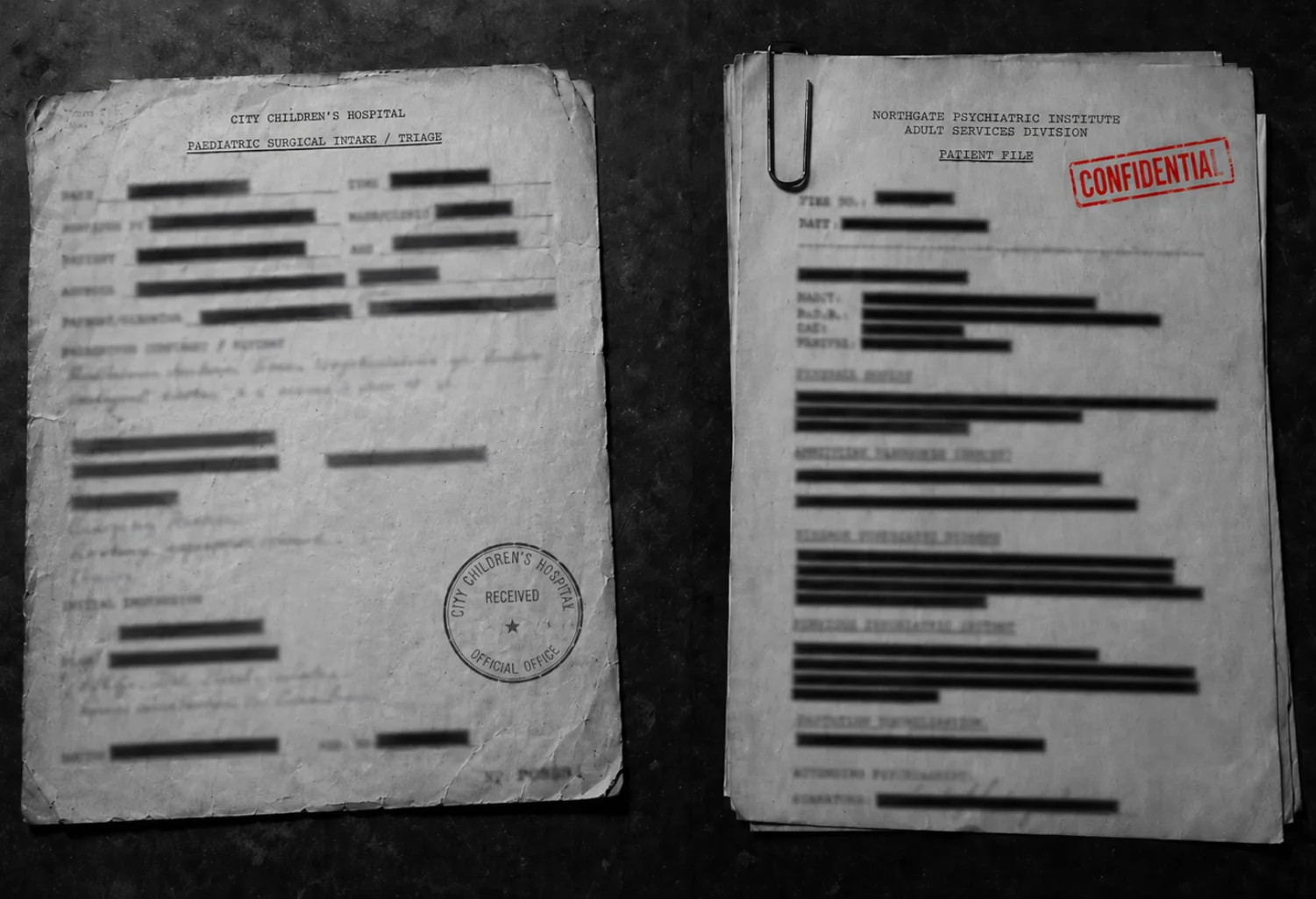
In March 1974, Philip K. Dick had a severe hallucination that told him his infant son had a burst right inguinal hernia. The diagnosis was entirely accurate and led to immediate, life-saving surgery.
The psychiatric institution treating Dick failed to integrate this physical validation. Paediatric hospital records and adult psychiatric files were kept in separate systems.
Because the doctors who verified the physical condition and the psychiatrists treating his mental state operated in different institutional silos, the physical proof of the hallucination was never integrated into his file.
A fragmented system turned a verifiable medical anomaly into a permanent literary mystery.
Investigation Glossary
-
Inguinal Hernia
A condition where tissue pushes through a weak spot in the abdominal muscle.
-
Sodium Pentothal
A fast-acting drug used to make a patient unconscious before a surgical procedure, sometimes known as truth serum.
-
Temporal Lobe Epilepsy (TLE)
A physical brain condition that can cause sudden seizures and intense visual or auditory hallucinations.
-
Data Siloing
A system failure where different departments keep their own records and do not share them with each other.
The Baseline Record and the Fire
The foundation of the 1974 failure chain begins with Dick’s baseline psychiatric record. He experienced a lifetime of clinical observation, starting with early therapy for an eating disorder.
By 1973, he possessed a heavily contradictory diagnostic history from various practitioners. A psychiatrist in Orange County diagnosed him as manic depressive.
Dr Sam Anderson in San Rafael had previously recorded a ‘schizophrenic reaction’. Two other unnamed doctors diagnosed paranoia, while another accused him of malingering. To manage these conditions, Dick was prescribed a heavy regimen of pharmaceuticals. The specific drugs included antipsychotics like Reserpine and Stelazine, mood stabilisers like Lithium, and the antidepressant Desipramine. He also had a documented twenty-year addiction to amphetamines.
A major disruption in this baseline record occurred in November 1971. His home in San Rafael, California, was broken into.
According to personal accounts and police logs, a fireproof file cabinet containing his personal papers was blown open with explosives. This physical destruction marks the first significant point of record divergence. Primary documents from his early life were incinerated or severely compromised in the blast.
Following the break-in, Dick experienced severe dysphoria. He was treated for addiction and suicidality at the X-Kalay rehabilitation centre in Canada. By the time he relocated to Fullerton and married Tessa Busby in 1973, the medical consensus was already fractured.
The early clinical notes were gone and replaced by a wall of heavy pharmaceutical intervention. The exact contents of the destroyed file cabinet remain unknown, complicating any retrospective baseline assessment.
Baseline Psychiatric Record
-
Pre-1973
Contradictory Early Diagnoses
Diagnoses spanning an eating disorder, manic depression, schizophrenic reaction, paranoia, and accusations of malingering across multiple practitioners.
-
Ongoing
Pharmaceutical Regimen
Patient prescribed antipsychotics (Reserpine, Stelazine), mood stabilisers (Lithium), and antidepressants (Desipramine), alongside a documented twenty-year amphetamine addiction.
-
November 1971
Archive Destruction
A fireproof file cabinet containing personal papers in San Rafael is blown open with explosives. Primary clinical notes and documents from early life are incinerated or compromised.
The Dental Extraction and the Trigger
The acute phase of the timeline begins in mid-February 1974. Dick underwent dental surgery for an impacted wisdom tooth. During the procedure, the surgical team administered sodium pentothal.
Following the surgery, he awaited a home delivery of painkillers from a local pharmacy. Accounts vary slightly on the exact medication on the faded pharmacy dispensation log, identifying it as either Darvon or codeine.
A delivery woman arrived wearing a golden necklace depicting a fish.
She identified the pendant as an ichthus, a symbol used by early Christians. Upon seeing the sunlight reflect off the pendant, Dick experienced what he termed a ‘pink beam’ of light. He Then reported a sudden influx of esoteric data and a sensation of ‘anamnesis’, which he described as the loss of amnesia regarding his true spiritual nature. He began to perceive his Fullerton environment as being superimposed with the landscape of first-century Rome.
Later biographers and researchers suggested these intense visual and auditory hallucinations were symptoms of Temporal Lobe Epilepsy (TLE).
They proposed the condition was triggered by the stress of the surgery, the withdrawal of the sodium pentothal, and the interaction with his existing psychiatric medications. The medical professionals actively treating him failed to order an Electroencephalogram (EEG) to test this physical hypothesis.
There is a complete absence of EEG data in the public or accessible private record. The clinicians relied entirely on subjective patient reporting, leaving the neurological explanation permanently untested.
The Paediatric Crisis and the Institutional Silo
Through early March 1974, the hallucinations intensified. Dick reported hearing an ‘AI voice’ and believed he was in contact with a Vast Active Living Intelligence System.
While listening to the Beatles track ‘Strawberry Fields Forever’, he claimed the lyrics transformed into a specific medical warning. The voice stated his infant son Christopher had an undiagnosed right inguinal hernia, the hydrocele had burst, and the condition would be fatal without immediate intervention.
Acting entirely on this internal auditory statement, Dick and his wife Tessa rushed the child to their physician. The medical staff examined the infant and confirmed the exact diagnosis. They scheduled immediate, life-saving surgery for the same day at a Fullerton facility.
This event marks the most critical administrative failure in the timeline. The paediatric hospital records logged the diagnosis and the surgery on physical triage notes.
Meanwhile, Dick’s adult psychiatric records logged his continued hallucinations.
Because the paediatric surgical team and the adult psychiatric team operated under standard privacy protocols, the fact that a hallucination produced entirely accurate anatomical data was never integrated into a single case study.
A pure psychosis does not generate accurate, hidden anatomical data about a third party. The psychiatric institution maintained its diagnosis of pure psychosis because the system never cross-referenced the surgical intervention. Because hospital administration systems do not cross-reference the diagnostic insights of parents against the psychiatric files of those parents, the two halves of the event remain permanently separated.
Institutional Silo Breakdown
Patient acts on auditory hallucination detailing fatal, undiagnosed right inguinal hernia in infant son.
Medical staff examine infant, confirm the exact diagnosis, and perform immediate life-saving surgery. Logged on physical triage notes.
Adult psychiatric records separately log continued hallucinations. The psychiatric institution maintains its diagnosis of pure psychosis.
System privacy protocols prevent cross-referencing. Accurate anatomical data generated during hallucination is never integrated into the patient's psychiatric case file.
The Witness Record vs The Mystical Narrative
Dick attributed his knowledge of his son’s condition to an external intelligence.
He claimed in his private notes and public letters that the insight came from a transcendentally rational mind. He maintained he had no prior knowledge of the condition.
The contemporaneous domestic record contradicts this claim.
In a later recorded interview transcript, Tessa Dick provided a mundane origin for the information. She stated that her husband likely recognised the symptoms because he had suffered from an inguinal hernia previously while playing tennis. She also noted she had already noticed symptoms in the infant and taken him to the doctor for related concerns.
At first, this looked like an impossible transfer of medical knowledge. Then the witness testimony turned up.
Dick possessed prior, rational knowledge of hernia symptoms. Later researchers hypothesised that his subconscious mind processed ambient physical clues during a state of altered neurochemistry, exacerbated by sodium pentothal withdrawal.
This synthesis was then presented to his conscious mind as an auditory hallucination. The failure to document Tessa Dick’s contextual knowledge at the time of the event allowed the mystical narrative to take root. This critical, evidence-neutral explanation was entirely omitted from the official psychiatric records.
Origin of Medical Knowledge
| Philip K. Dick's Claimed Source | Tessa Dick's Recorded Witness Account |
|---|---|
| Insight came from a transcendentally rational mind or external intelligence. | Knowledge likely stemmed from his subconscious processing physical clues based on his own previous tennis-related inguinal hernia. |
| Maintained he had no prior knowledge of the specific condition or symptoms. | Noted she had already observed symptoms in the infant and had taken him to the doctor for related concerns prior to the crisis. |
Archival Breakdown and Literary Overshadowing
The documentary record eventually splits into a highly preserved professional archive and a severely degraded medical archive.
The primary repository for Dick’s physical documents is the Special Collections Library at California State University, Fullerton. The holdings are gathered into 24 document boxes. Box D22 is dedicated entirely to professional correspondence.
In May 1974, Dick wrote detailed letters to his Doubleday editor.
He negotiated royalty rates, managed disputes with his literary agency, and tracked missing copies of his novel Flow My Tears, the Policeman Said. A patient suffering from a total psychotic collapse does not typically maintain the executive function required to audit international royalty statements.
The rigorous archiving process at CSU Fullerton was restricted entirely to his literary output. The raw unedited magnetic audio tapes he recorded during the spring of 1974 are entirely excluded from this academic archive. The medical charts from the Fullerton hospital are also missing.
Researchers relying on this archive will find a meticulously documented literary career. They will encounter a total vacuum regarding the physical evidence required to audit his 1974 claims.
The Fragmented Documentary Record
| Preserved in CSU Fullerton Archive (Box D22) | Missing from Accessible Medical Archives |
|---|---|
| Detailed May 1974 correspondence to Doubleday editor. | The raw, unedited magnetic audio tapes recorded during the spring of 1974. |
| Royalty rate negotiations and literary agency dispute records. | Medical charts and surgical intake forms from the Fullerton hospital. |
| Letters tracking missing copies of published novels. | Follow-up Electroencephalogram (EEG) data testing for Temporal Lobe Epilepsy. |
Researchers encounter a meticulously documented literary career alongside a total vacuum regarding the physical evidence required to audit his 1974 medical claims.
Sources
Sources include: the Special Collections Library at California State University, Fullerton (Box D22); witness testimony transcripts from Tessa Dick sourced via CUNY Academic Works and ORCA; ‘A Psychotic Prophet?’ from the IOSR Journal; and archival materials from ‘The Gnosis Archive’ and ‘Philipdick.com’.
Claim-Source Matrix (Condensed)
| Investigated Claim | Verification Status & Notes |
|---|---|
| Hallucination correctly identified a fatal, undiagnosed inguinal hernia, prompting life-saving surgery. | Confirmed Supported by paediatric and psychiatric records. |
| Paediatric surgeons and psychiatrists operated in separate institutional silos. | Confirmed Validates that the lack of cohesive narrative is due to strict data siloing. |
| Destruction of his personal archive in a November 1971 break-in and explosion. | Confirmed Relies on unprivileged sources; implies deliberate targeting but lacks institutional proof of actors. |
| Mid-February 1974 dental surgery involving the administration of sodium pentothal. | Confirmed Verifies the surgery, the impacted wisdom tooth, and the specific anaesthetic used. |
| Absence of any follow-up Electroencephalogram (EEG) by medical providers. | Confirmed Total absence of EEG data in the public or accessible private record to test for Temporal Lobe Epilepsy. |
| Tessa Dick's testimony of mundane knowledge regarding hernia symptoms. | Confirmed Verifies prior tennis injury and previous doctor visits for the infant. |
What we still do not know
- The exact date and time of admission on Christopher Dick's surgical intake form at the Fullerton hospital in March 1974.
- Whether the Orange County Department of Mental Health retains correspondence logs regarding Dick's 1974 methadone clinic letter.
- The physical location and custody status of the original 1974 magnetic audio tape diaries.
- The exact chemical compound and dosage dispensed by the Fullerton pharmacy in February 1974.
Comments (0)