
Human Perception & Bias
Investigations into situations where flawed judgement or faulty memory fundamentally distorts what witnesses believe they are seeing. We look at how entrenched group assumptions override better data. This helps us understand how flawed interpretation shaped the initial response as well as the lasting record.
The Narrative Killers – A Psychological Autopsy of the Flannan Isles Mystery
The story of the Flannan Isles is defined by fictions that are more memorable than the facts. This is a psychological autopsy of why the human mind prefers a good story over a true one, and how narrative can kill a record.
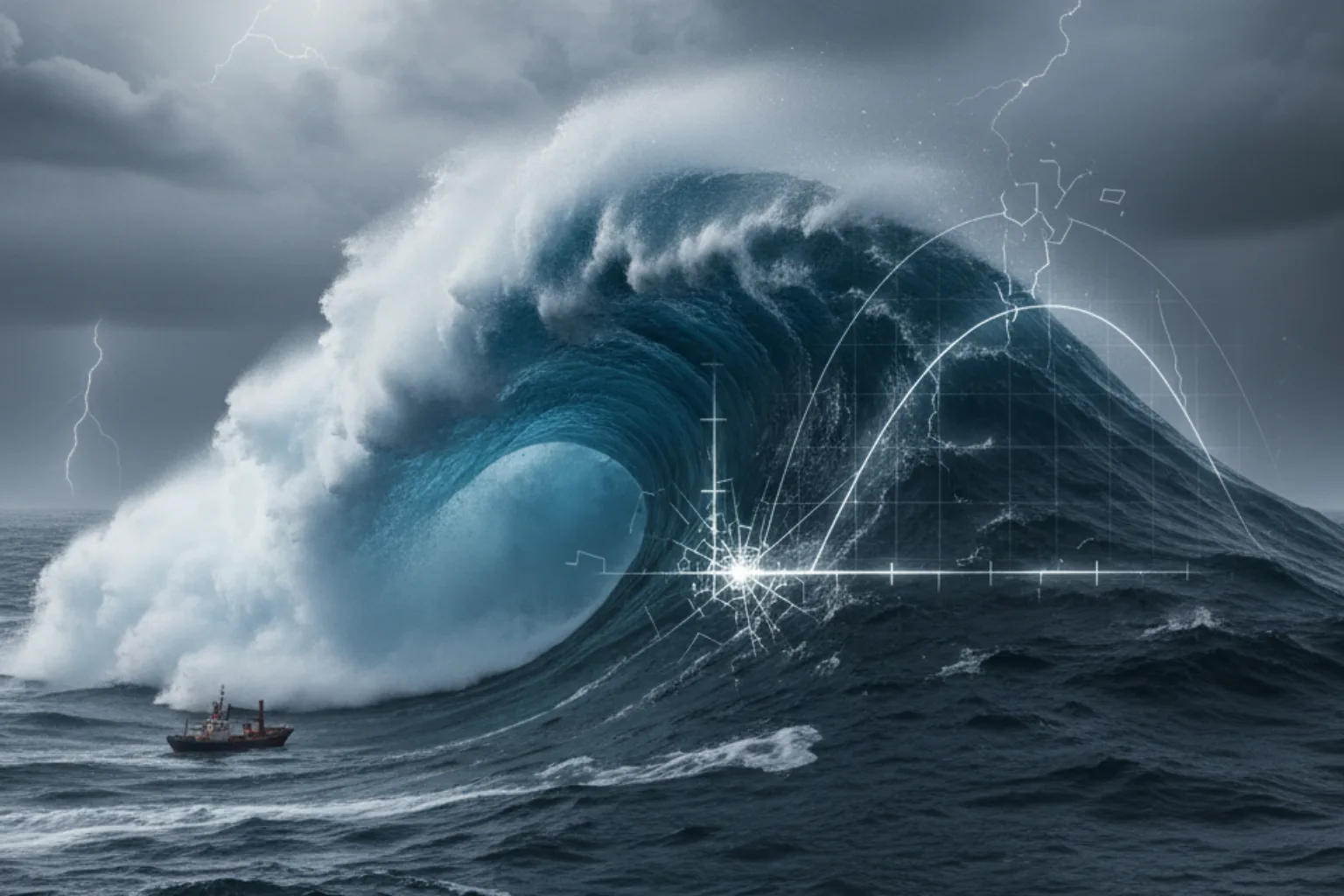
Rogue Waves – The Flannan Isles Case and the Draupner Evidence
In 1900, a lighthouse team vanished from the Flannan Isles. In 1995, a North Sea platform measured a wave twice the expected height. The two events, nearly a century apart, reveal how rogue seas were dismissed until instruments proved them real.

Why Western Academia Avoids the Ethiopian Ark of the Covenant Claim
The original Ark of the Covenant allegedly sits guarded in an Axum chapel. We examine how funding biases, theological gridlock, and colonial historiography created a century-long academic blind spot around the claim.

The Pollock Twins Case Investigation and Reincarnation Claims
The 1958 Pollock twins case became a cornerstone of academic reincarnation research. However, an audit of the underlying evidence reveals missing contemporaneous medical records and irreconcilable witness contradictions.
The Em Dash That Wouldn’t Die – AI, Authorship, and Punctuation
Why does AI overuse the em dash? This case traces its literary roots, digital quirks, and what one punctuation mark reveals about machine authorship.

Anechoic Chamber Safety – Sensory Deprivation and Institutional Duty of Care
While clinical data proves short-term sensory deprivation triggers psychological distress, our investigation reveals a persistent administrative blind spot where soundproof chambers are audited purely for physical safety, ignoring severe psychological hazards.